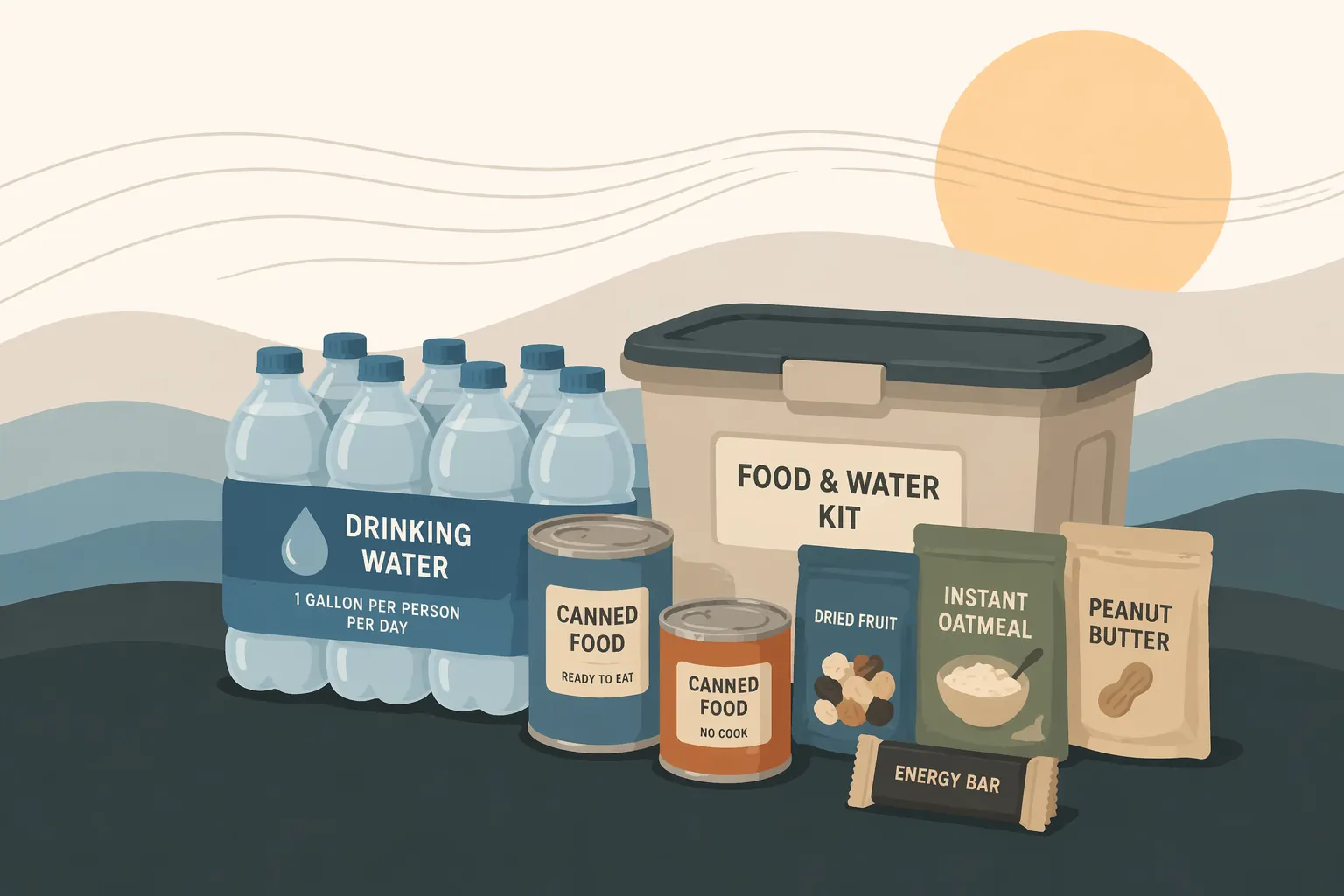
Water — the basics
The general rule is one gallon of water per person per day. That sounds simple until you do the math for a family of four over a week. Water is also heavier than it seems — a gallon weighs 8.3 pounds. Plan for where you'll store it as well as how much you need.
- One gallon per person per day minimum — for drinking and basic hygiene
- Three-day minimum for an evacuation kit — 72 hours is the standard planning horizon
- Two-week supply for home sheltering — some areas lose water pressure or service for days after a storm
- A clean, lidded storage container or water-safe jugs — commercially sealed or food-grade containers with spigots
- Water purification tablets or a portable filter — for situations where your stored supply runs out
A family of four needs at least 12 gallons for 72 hours. For two weeks at home, that's 56 gallons — about nine 6-gallon jugs or four large water barrels. Plan your storage space before you buy.
Water — storage and rotation
Stored water doesn't last forever. Commercially bottled water has a "best by" date, but the water itself doesn't expire — the plastic does. Sunlight and heat degrade containers and promote bacterial growth. Store in a cool, dark place and rotate annually.
- Commercially bottled water lasts 1–2 years unopened — rotate once a year, before hurricane season
- Food-grade containers with tight lids — never use milk jugs; protein residue promotes bacteria
- Store away from direct sunlight, heat, and chemicals — gasoline, paint, and cleaning supply vapors can permeate plastic
- Label storage date on every container — so you know when to rotate
Food — what to stock
You're not cooking. Power is out, the stove may be off-limits, and you may be in a shelter or a car. The food you stock should need no preparation, produce minimal waste, and store well at room temperature for months.
- Canned goods: beans, tuna, chicken, soup, vegetables, fruit — long shelf life, high caloric density
- Peanut butter and nut butters — calorie-dense, shelf-stable, requires no preparation
- Crackers, dried fruit, nuts, and trail mix — no-cook snacks with good nutrition
- Granola bars and protein bars — compact, calorie-dense, and a reliable morale boost
- Instant oatmeal and shelf-stable milk — if you have access to any heat source
- Baby formula and infant food if applicable — stock extra; this runs out first in disasters
- Comfort foods: chocolate, coffee, tea — stress is real and familiar food helps
Aim for 2,000+ calories per person per day. Peanut butter (200 calories per 2 tablespoons) and canned beans (400 calories per can) are among the most efficient foods you can stock.
Food — storage and rotation
The best emergency food supply is the one that gets used and restocked before it expires. Build your supply from food you already eat, buy extra, and rotate it the same way you'd rotate any pantry item.
- Check expiration dates twice a year — before hurricane season (June 1) and after
- Store in a cool, dry location — humidity and heat shorten shelf life significantly
- A manual can opener (keep two) — the single most-forgotten item in kit surveys
- Paper plates, disposable utensils, and a few garbage bags — water conservation and waste management
- A camp stove and fuel canister — if you're sheltering in place and want hot food; follow safety instructions about indoor use
Special dietary needs
Standard emergency food guidance assumes healthy adults. If you have dietary restrictions, allergies, or medical conditions that affect diet — or if you're stocking for infants, toddlers, or elderly family members — you need to plan specifically.
- A 7-day supply of any medically required dietary foods — low-sodium, diabetic-appropriate, allergen-free, as applicable
- Extra infant formula and baby food — runs out first at stores and distribution points
- High-calorie, easy-to-eat foods for older adults — softer textures, less prep required
- Electrolyte powder packets — important for heat exposure or illness; shelf-stable and lightweight
- A printed list of dietary restrictions for each household member — useful if you end up at a shelter
More guidance: The FEMA ready.gov food page and the Red Cross emergency supply list both include expanded guidance on food safety and shelf life.