Wound care
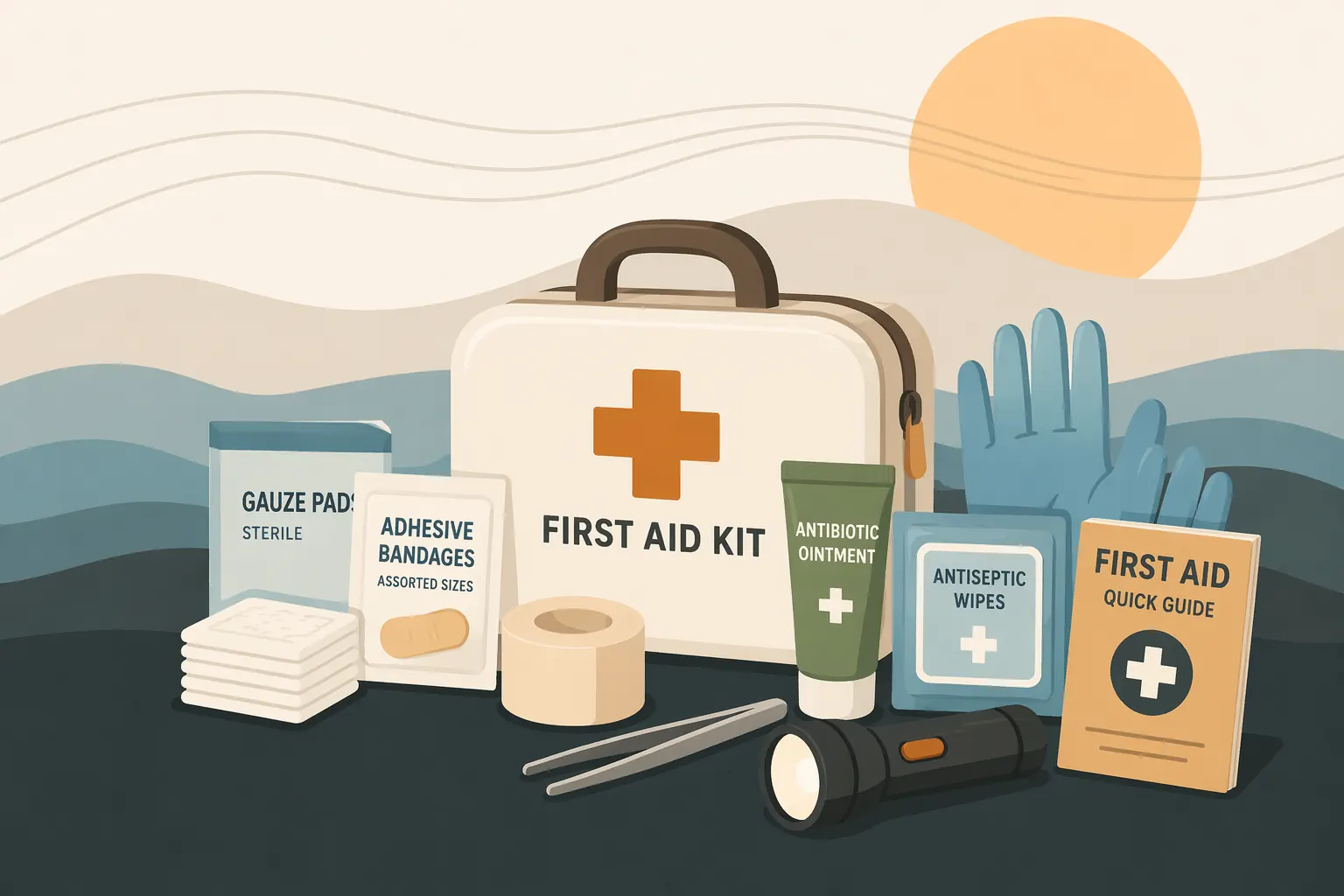
The most common hurricane injuries are lacerations and puncture wounds from debris — broken glass, nails, sheet metal, tree limbs. Many happen during cleanup, days after the storm, when people are tired and moving quickly. Basic wound care supplies prevent infection, which in a disaster setting can become serious quickly.
- Assorted adhesive bandages (many sizes) — don't skimp; use the right size for the wound
- Sterile gauze pads (multiple sizes) — for larger wounds and padding
- Medical tape — holds gauze without adhesive directly on the wound
- Elastic bandages (ACE wraps) — compression and support for sprains and larger wounds
- Antibiotic ointment — reduces infection risk on minor cuts and abrasions
- Antiseptic wipes or solution — for cleaning wounds when running water isn't available
- Tweezers — for splinter and debris removal
- A magnifying glass — useful with tweezers in low light
- Nitrile gloves (several pairs) — always treat wounds gloved; never assume clean hands
Pain and fever management
Over-the-counter pain relief is genuinely useful in a disaster context — for headaches, muscle pain from exertion, fever, and minor injuries. The key is having enough and knowing what you have.
- Acetaminophen (Tylenol) — fever, mild pain; safe for most people including children
- Ibuprofen (Advil/Motrin) — anti-inflammatory for muscle pain, sprains
- Children's pain reliever (if applicable) — weight-dosed; know your child's dose in advance
- Aspirin — useful for adults during cardiac events; do not give to children
- Antacids — stress and unfamiliar food cause digestive upset
Illness management
After a hurricane, sanitation conditions can break down. Waterborne illness, respiratory problems from mold exposure, and stress-related digestive issues are all common. A few targeted medications go a long way.
- Antidiarrheal medication — critical if sanitation is compromised
- Oral rehydration salts — for dehydration from illness or heat; more effective than water alone
- Antihistamine (diphenhydramine or loratadine) — allergic reactions, itching, sleep support
- An N95 or P100 respirator — for mold exposure during cleanup (standard cloth masks do not filter mold spores)
- Eye wash solution — debris in eyes is common during cleanup
- Thermometer — for monitoring fever; can differentiate heat exhaustion from illness
Mold exposure is one of the most commonly underestimated hazards in hurricane aftermath. If you're entering a building that flooded, wear an N95 or better respirator. Cloth masks don't filter mold spores.
Tools and documentation
Medical supplies without the tools to use them safely — or without the information to make good decisions — are less useful than they should be. A few additions turn a box of bandages into a functional first aid kit.
- First aid manual — a physical book, not an app; Red Cross Pocket First Aid is a standard reference
- Emergency contact list including poison control (1-800-222-1222) — post inside the kit lid
- Medical history and medication list for each household member — current diagnoses, medications, allergies, dosages
- Emergency prescription information — especially for controlled substances that require ID to refill
- CPR face shield — disposable, single-use, takes up almost no space
- Scissors (trauma shears) — for cutting clothing away from wounds
- A waterproof container or bag — keeps the entire kit dry
Prescription medications
One week of prescription medications is the minimum standard for any emergency kit — and a minimum that's worth exceeding. Pharmacies close. Supply chains break. Insurance refill restrictions can be navigated in advance with a phone call to your insurer or physician before hurricane season.
- Seven-day supply of all prescription medications, rotated monthly to stay current — rotating prevents stockpiling expired doses
- A cooler with ice packs for any medication requiring refrigeration — insulin, certain eye drops, some biologics
- Written copies of all prescriptions including dosage and prescribing physician — critical if you need care from an unfamiliar provider
- Insurance card and pharmacy benefit information — needed for emergency refills at an unfamiliar pharmacy
- Ask your insurer about emergency refill authorization — many allow a 30-day advance fill once per year for documented conditions
A note on limits: This kit is a supplement to professional medical care, not a replacement. For any serious injury, illness, or worsening symptoms, seek care from a medical professional as soon as it is safe to do so.