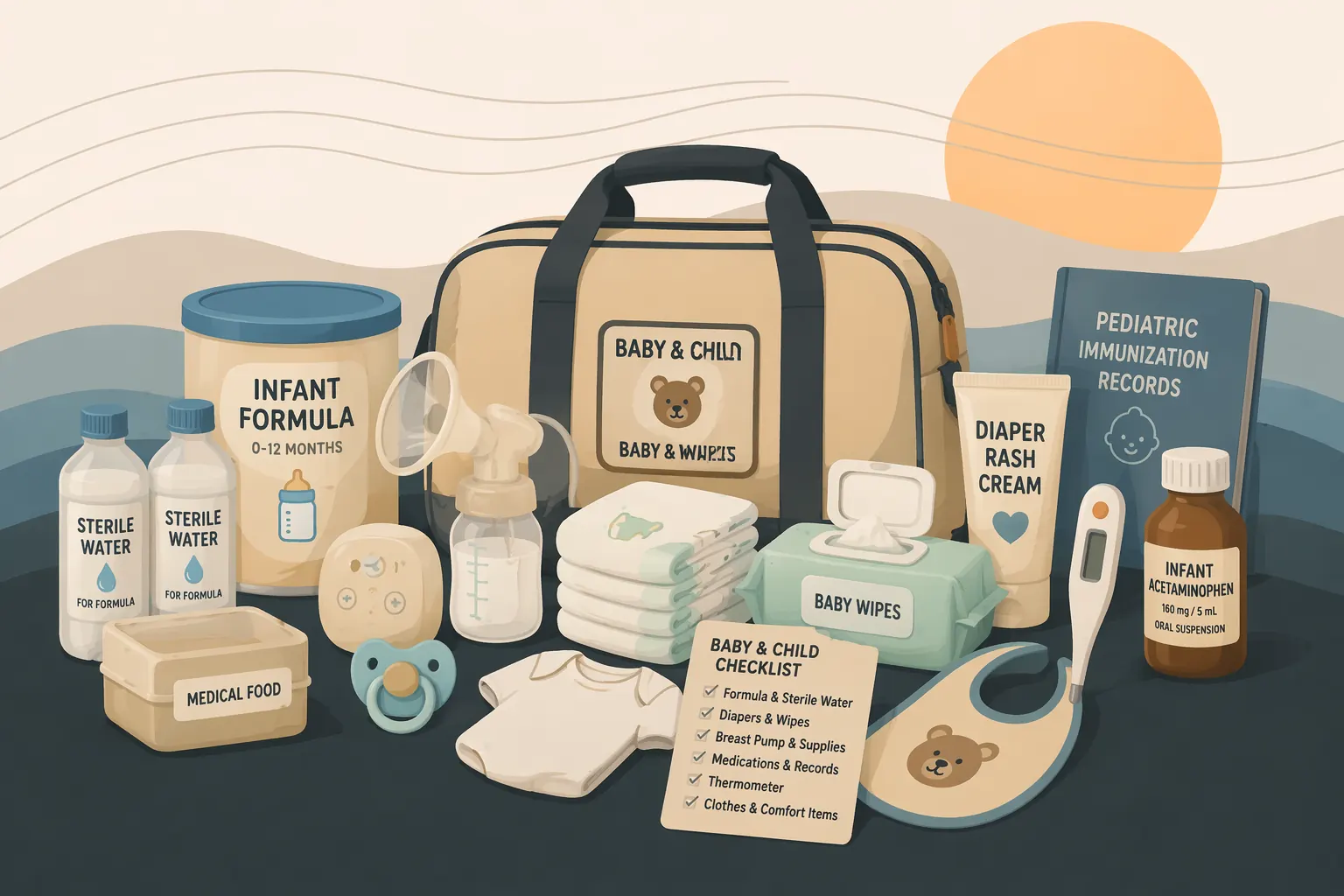
Infants (0–12 months)
Infants are entirely dependent. They can't drink water when the formula runs low, can't communicate discomfort, and are more vulnerable to heat, infection, and disruption than older children. Every item in this section matters specifically because of that dependency.
- Seven-day supply of formula (if not exclusively breastfeeding) — formula is the first thing to sell out at stores during storm warnings
- Sterile water for formula mixing — tap water may be contaminated post-storm
- Breast pump with battery or manual option if breastfeeding — power may be unavailable
- Diapers: 10 per day as a planning baseline — sizes change fast; stock the current size
- Baby wipes (multiple packs) — sanitation substitute when running water is unavailable
- Diaper rash cream
- Infant acetaminophen (correct dosage for weight)
- Infant thermometer (rectal or forehead)
- A supply of any medical food (hypoallergenic formula, thickeners, etc.)
- Pediatric immunization records
Formula runs out at stores first. If your infant requires a specific type (hypoallergenic, soy-based, specialized), stock at least a two-week supply. Standard formula is often available at distribution points; specialty formula is not.
Toddlers (1–3 years)
Toddlers are mobile, curious, and hard to explain a hurricane to. Their food needs are different from infants and from older children. Familiar items provide comfort when the environment becomes unfamiliar.
- Shelf-stable toddler meals and pouches — no-prep, familiar food reduces mealtime stress
- Sippy cups or water bottles designed for toddlers
- Toddler-appropriate pain reliever — weight-dosed; know the current weight
- Diapers or pull-ups depending on stage — 10 per day if in diapers
- Extra changes of clothing — accidents increase under stress
- A few familiar comfort items: a stuffed animal, a blanket, a book or two
- Portable sound machine or white noise app if sleep routine is sound-dependent
- Any prescription medications, clearly labeled with dose
School-age children (4–12 years)
School-age children understand enough to be anxious about a storm. Having a role in the preparation helps — let them pack their own small bag of chosen items. Their medical and practical needs are more similar to adults, but they still need specific planning.
- Medications: any prescriptions and appropriate dose of OTC pain reliever and fever reducer
- Pediatric immunization records — required for temporary school enrollment
- A few books, games, or activities they choose — agency reduces anxiety
- A small backpack of their own — ownership and responsibility are meaningful at this age
- Appropriate-size clothing and rain gear
- Comfort items they identify as important
All ages — documentation and registration
After a disaster, children may be separated from parents. They may need to enroll in a temporary school. They may need medical care from a provider who doesn't know them. Documentation fills the gaps.
- A recent photo of each child — for identification if separated
- Birth certificates (copies)
- Health insurance cards
- Immunization records — required for temporary school enrollment
- Your child's physician's name and contact
- A written note with your name, contact number, and emergency contact — kept with the child or in their backpack
- Medication list with dosages for each child
Comfort and routine
Children cope better with disruption when routine is preserved where possible and when they feel safe. This is not a luxury consideration — research on disaster-affected children consistently shows that maintaining routine and providing familiar objects reduces post-event anxiety. This belongs in the kit.
- Favorite stuffed animal or security object — for each child who has one
- Books, puzzle, small game — screen-free options that work without power
- A nightlight or headlamp sized for children — darkness is more frightening for children than adults
- A familiar snack — something they like and recognize
- Regular bedtime routine as much as possible — even in a shelter, consistent bedtime signals safety