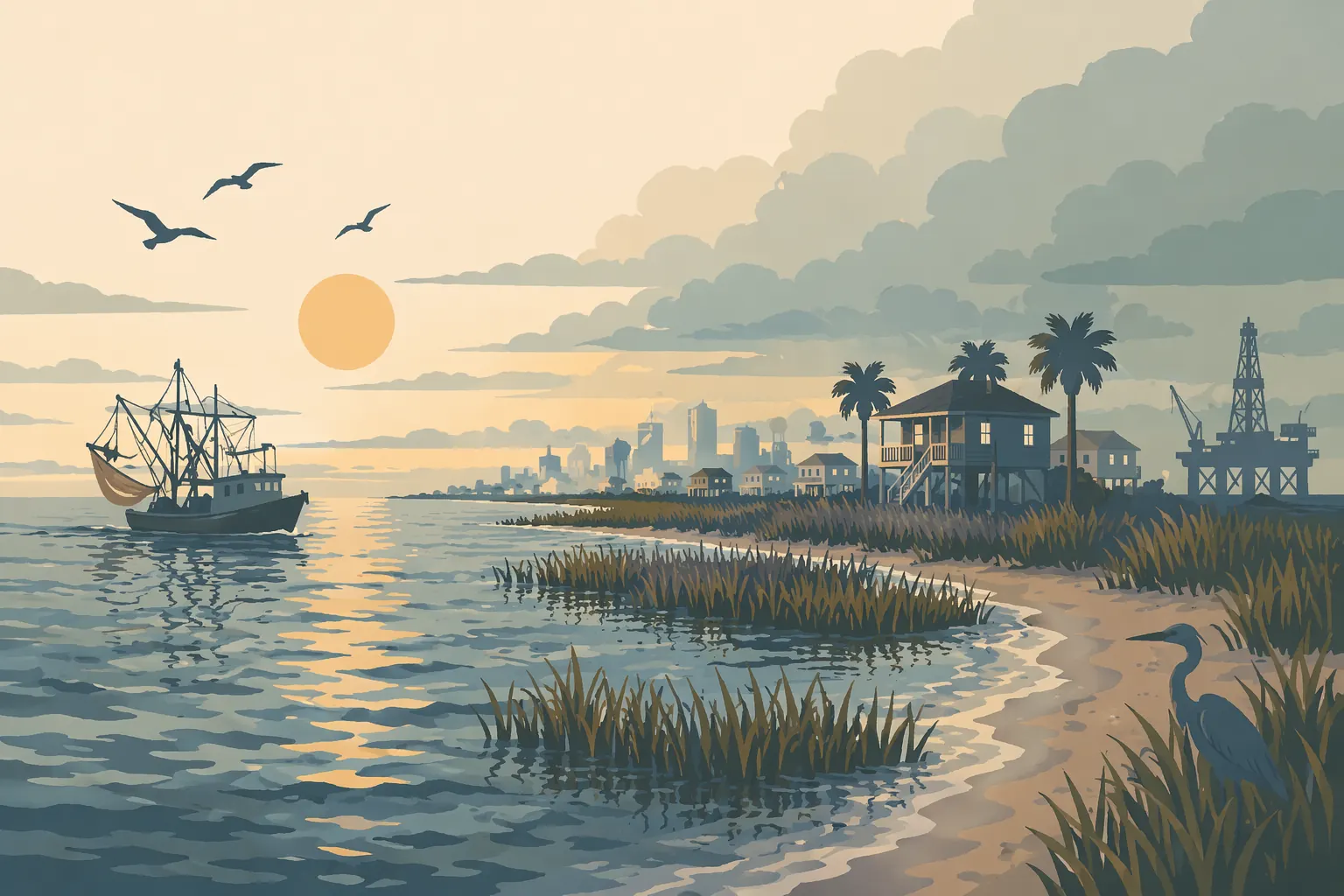
What the Gulf Coast shares
While each state page addresses local specifics, several factors apply across the entire Gulf Coast.
- Warm Gulf water provides storm fuel. Water temperatures in the Gulf regularly exceed 85°F in summer, and the relatively shallow water retains heat well into fall. This is why Gulf Coast storms can intensify quickly.
- Low-lying coastline means storm surge travels inland with less resistance. The Gulf Coast from Texas through Florida has relatively low coastal elevation across much of its extent.
- Extended power outages in summer heat are a genuine health emergency across the region. Unlike the northeast, where an August power outage is uncomfortable, a Gulf Coast summer outage can reach dangerous heat exposure thresholds within hours for the elderly and young children.
- Post-storm flooding from rainfall remains dangerous well after the wind subsides, especially in developed areas with inadequate drainage infrastructure.
Regional supply additions for the Gulf Coast
Gulf Coast-specific conditions — extreme summer humidity, mosquito pressure after flooding, and the heat exposure risk — add a few items beyond the standard kit.
- Insect repellent (DEET-based) — flooding creates mosquito breeding conditions within days
- Extra water — humidity and heat increase water needs significantly during outages
- Battery-powered fan — summer outages carry heat risk across the region
- N95 respirators — mold growth in humid climates after flooding is rapid
- Waterproof bags — Gulf storms bring heavy rain and surge; treat everything as potentially wet
Official sources to bookmark now
The organizations below are the authoritative sources for storm-specific guidance across the Gulf Coast. Bookmark these before the season — not when a storm is approaching.
- National Hurricane Center — storm track and intensity forecasts
- FEMA — federal preparedness resources
- 211 — dial 2-1-1 or visit 211.org — connects to local services in all Gulf states
- Your state emergency management office — see individual state pages (Florida, Texas, Louisiana, Alabama, Mississippi) for direct links
- Your county or parish emergency management office — issues local evacuation orders; find via "[your county] emergency management"
Evacuation routes and shelter locations are managed at the county and state level, not regionally. Always confirm with your local emergency management office.
Historical context
The Gulf Coast's relationship with hurricanes is long and well-documented. The region has produced some of the most severe hurricane events in US recorded history — from the 1900 Galveston storm to Camille (1969) to Katrina and Rita (2005) to Harvey, Irma, and Maria (2017) to Ida (2021). That history has shaped federal, state, and local emergency management systems in measurable ways: levee rebuilding, updated surge modeling, improved coordination between agencies, and expanded public communication systems.
The risk is real. This site is about the preparation part.
Weather intelligence
Live Gulf Coast wind gusts
A fast live view for checking where stronger gusts are organizing across the Gulf Coast. Use it as context, then verify warnings and local instructions with the National Hurricane Center and your state emergency management office.
Source: Ventusky. For official warnings, use the National Hurricane Center and your state emergency management office.