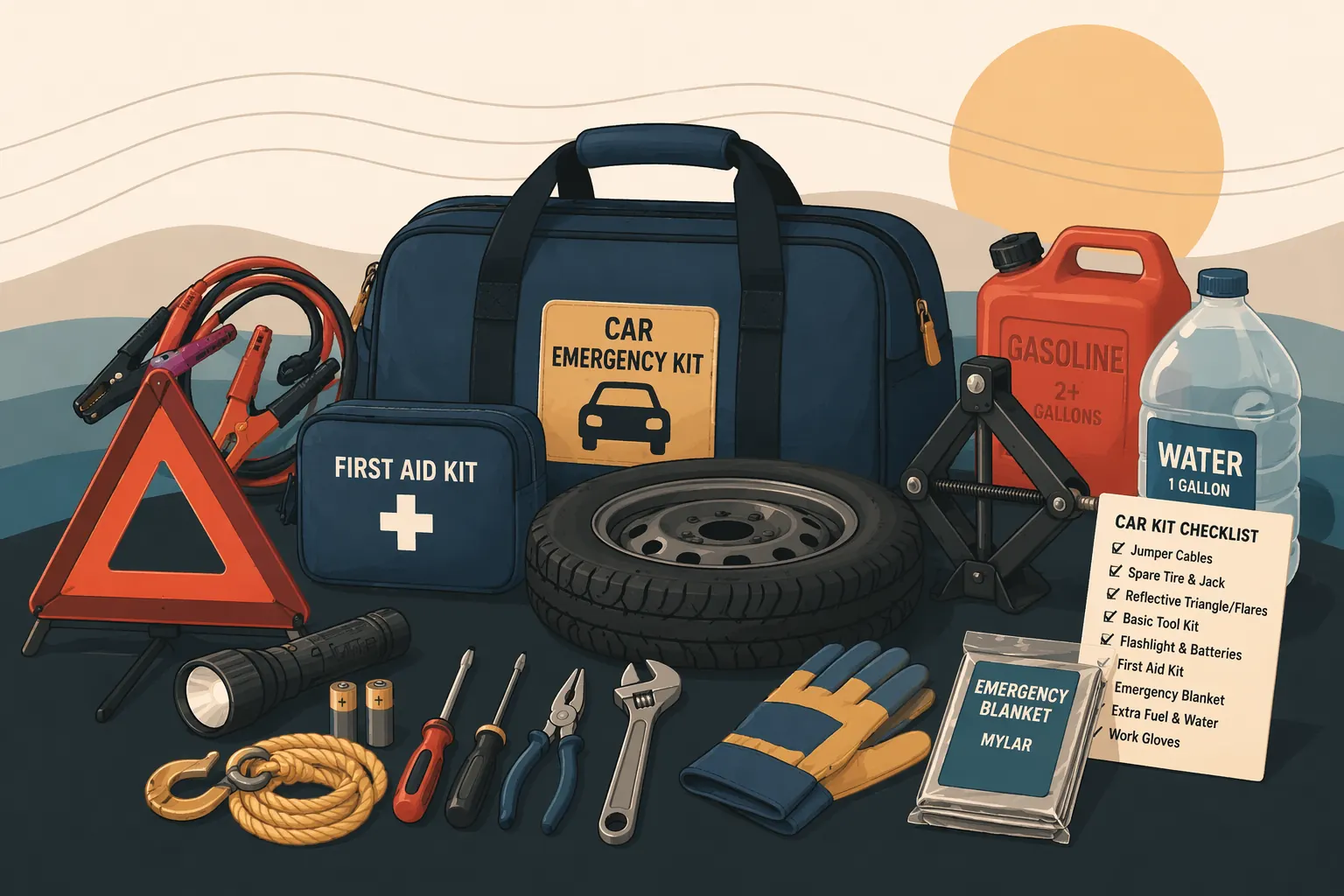
Year-round car kit (always in the vehicle)
A basic emergency car kit belongs in your vehicle permanently — not just during hurricane season. These items handle flat tires, dead batteries, minor breakdowns, and the unexpected situations that don't announce themselves in advance.
- Jumper cables or a portable jump starter — flat batteries happen more often than any other car emergency
- A full-size spare tire (or compact spare) in working condition — check pressure periodically
- Tire iron and car jack
- Reflective triangle or flares — for roadside visibility; required by law in some states
- Basic tool kit: screwdrivers, pliers, adjustable wrench
- Work gloves
- A flashlight with extra batteries — or a headlamp
- First aid kit
- An emergency blanket (mylar) — compact, warm, takes up almost no space
Fuel and navigation
Gas stations sell out before major storms. Stations that still have fuel often have lines measured in hours. Having a full tank before a storm watch is issued — not a warning — is the most important single thing you can do for your evacuation readiness.
- Fill your tank when a storm watch is issued — don't wait for the warning order
- Know your vehicle's range on a full tank — and your planned route's distance
- An approved fuel container (1–2 gallons) as an emergency reserve — kept outside the passenger compartment
- A paper map of your state and neighboring states — GPS fails; cell service fails; paper maps don't
- Know your evacuation route and at least one alternate — and drive both before you need them
- A car charger for phones — your running car is a generator
Evacuation additions
Once your evacuation kit is loaded, the car becomes the center of your plan. A few additions specific to a car-based departure are worth having ready before the order comes.
- Your full evacuation kit — the bag from your door
- Medications (clearly labeled) — not buried in the trunk
- Phone charger and backup battery bank
- Cash in small bills — ATMs and card readers will be down along evacuation routes
- A change of clothes per person — accessible, not packed away
- A cooler with one day's food and water — for the drive; perishables first
- Entertainment for children if applicable — long traffic delays are common
After the storm
Your car is often the first way you assess damage and reach resources after a storm. A few additions help with that.
- N95 respirators — for driving through or near damaged areas with debris, mold, or chemical hazards
- Heavy-duty work gloves — for clearing debris from your path
- Boots or closed-toe shoes for everyone in the vehicle
- A tow strap or recovery strap — for helping get vehicles unstuck from mud or debris
- A charged battery bank — to charge phones when you're parked but not running the engine