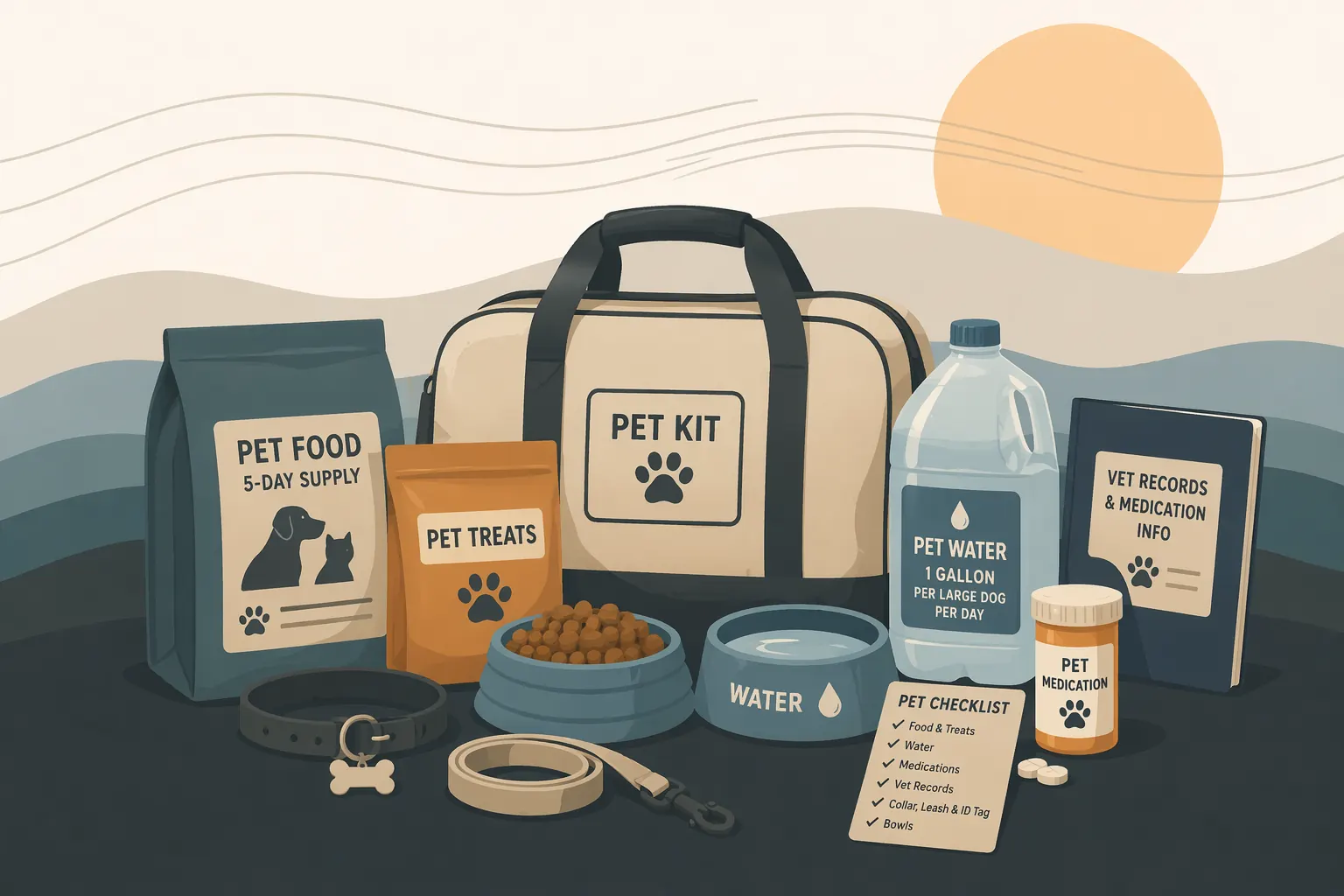
Food and water
Pet food runs out at stores as fast as people food after a storm warning. If your pet has dietary restrictions or requires a prescription diet, availability during and after a storm is even less certain. Stock a five-day supply minimum; a two-week supply is better for sheltering in place.
- Five-day supply of pet food per animal — more if sheltering in place — store food runs low quickly once a storm warning is issued
- A collapsible or portable food and water bowl — lightweight, easy to pack, and keeps feeding routine consistent
- One gallon of water per large dog per day; less for cats and small animals — but have it regardless; clean water may not be available at your destination
- Any prescription pet food, rotated monthly to stay current — specialty diets are not available at general-supply distribution points
- Manual can opener if your pet food comes in cans — easy to forget and hard to replace after a storm
If you have a pet with a medical condition requiring a prescription diet, contact your vet about obtaining an extra supply before hurricane season. These diets are not available at general-supply distribution points.
Documentation
Shelters — even pet-friendly ones — require proof of vaccinations. If you cross state lines, requirements differ. If your pet is lost, a microchip and current registration dramatically increase the likelihood of being reunited.
- Current vaccination records — rabies is required for shelter admission in most states
- Proof of microchip registration, with your current contact information — a chip with an outdated address or phone number is far less useful
- A recent photo of your pet — for lost-pet identification; a printed copy survives without a phone
- Your veterinarian's name and contact information — including after-hours or emergency contact if available
- Pet health insurance card if applicable — needed for any care received at an unfamiliar clinic
- For horses, livestock, or exotic animals: contact your county extension office or state veterinary office in advance of a storm — evacuation and sheltering options for large animals require separate planning
Carriers and containment
A pet that can't be safely contained is a pet that can't be evacuated. Many shelters and hotels require carriers or crates. Even if they don't, a stressed animal in a carrier is safer — for them and for you.
- A carrier or crate for each animal, sized so the animal can stand, turn, and lie down — too small is stressful; too large can be unsafe in transport
- A harness and leash in addition to a collar — collars can slip; harnesses hold under stress
- ID tags with current address and phone number — in addition to microchip; visible ID speeds reunion if a pet escapes
- A familiar blanket or toy in the carrier — reduces stress during transport by providing a scent anchor
- Cleaning supplies for accidents: paper towels, waste bags, enzymatic cleaner — accidents happen in carriers under stress; enzymatic cleaner neutralizes odor
Medications and health
The stress of evacuation can affect animals as much as people. If your pet takes daily medication, or if your pet has anxiety triggered by noise or disruption, plan for that specifically.
- A seven-day supply of any prescription medications, clearly labeled — pharmacies and vet clinics may be closed for days after a storm
- Flea, tick, and heartworm prevention if due during the outage period — disruption makes it easy to miss a dose; pack it so you don't
- Anti-anxiety medication if your vet has prescribed it — ask about this before storm season so you have it when you need it
- First aid kit for pets: gauze, vet wrap, antiseptic wipes, tweezers, disposable gloves — minor injuries are common during evacuations; basic supplies let you handle them
- Your vet's after-hours or emergency contact number — keep a written copy, not just a phone contact that may be inaccessible
Sheltering with pets
Most evacuation shelters don't accept pets. Find out which ones do before you need to leave — that's not a detail you want to sort out during a mandatory evacuation.
- Research pet-friendly hotels along your evacuation route — book early; they fill up fast once a storm watch is issued
- Contact your county emergency management office to find designated pet-friendly shelters — availability and location vary by county and storm
- Know that general Red Cross shelters typically do not accept pets (except service animals) — plan for an alternative rather than discover this at the door
- Many areas have separate co-located pet shelters adjacent to general emergency shelters — you stay in the main shelter; your pet stays nearby in a supervised facility
- If you leave pets behind: leave them inside, with food, water, and ID — never outside — outdoor pets cannot survive storm surge, flooding, or debris
- Never leave pets in a vehicle in hot weather — vehicles heat rapidly even with windows cracked; this is a life-safety issue